Blog
Building A Shared Vision Of Inclusive Education In Emergencies
- Inclusive education
- The Americas
- Africa
Though governments have committed to ‘leaving no one behind’ in line with the Sustainable Development Goals (SDGs) and the UN Convention on the Rights of Persons with Disabilities (CRPD), children with disabilities continue to be underrepresented and underserved in humanitarian responses.
People with disabilities are often excluded from Official Development Assistance (ODA) – money that governments spend on development in low and middle income countries. In fact, in 2020, data from the Organization for Economic Cooperation and Development (OECD) Development Assistance Committee (DAC)’s Creditor Reporting System (CRS) found that just 2% of ODA projects considered the inclusion of people with disabilities in their design and delivery.
When ODA projects do include people with disabilities, they frequently promote segregation, violating rights outlined in the CRPD. This is particularly prevalent in education and emergency focused projects – research from Inclusion International found that in 2018, 42% of education programming and 50% of emergency response programming was not compliant with the CRPD.
As representative groups led by people with disabilities, Organisations of Persons with Disabilities (OPDs) are the experts in the needs of people with disabilities and their families. This is reflected in article 4.3 of the CRPD, which affirms that engagement of OPDs is essential for the delivery of projects that are truly inclusive.
Despite this, OPDs, particularly those based in low income countries, are often viewed as recipients of aid, rather than equal partners when working with humanitarian organisations. And though humanitarian organisations have committed to include children with disabilities in education in emergencies (EiE) interventions, this lack of meaningful OPD engagement translates to a poor understanding of practical action needed to make sure no child is left behind.
We are not just beneficiaries. We are partners. We have solutions. We live the reality
Siddo Omarou – Fédération Nigerienne de Personnes Handicapées (FNPH)
In June 2025, we worked with our members ASDOWN Colombia and Fédération Nigérienne des Personnes Handicapées (FNPH) to host a 4 day workshop focused on strengthening collaboration between OPDs and humanitarian actors in Colombia and Niger.
The first 3 days of the workshops were dedicated to capacity building for OPDs – deepening knowledge of the principles of inclusive education and the international frameworks that support them, strengthening advocacy skills and preparing to take leading roles in sustainable and equitable partnerships with humanitarian organisations.
The final day of the workshops brought OPDs together with humanitarian actors to build a shared understanding of what inclusive EiE interventions look like, and an action plan for steps that humanitarian organisations can take to promote inclusion of children with disabilities.
This series of workshops was delivered as part of our project about EiE, funded by Education Cannot Wait (ECW). You can read more about this project here.
Day 1 – Laying the foundations
On the first day of the workshops, participants focused on developing their understanding of the principles of inclusive education, and the international frameworks supporting the right to inclusive education. You can read more about Inclusion International’s view on inclusive education in our Inclusive Education Position Paper.
The international frameworks reviewed on day 1 included Article 24 of the CRPD, which says that countries which have ratified (agreed to follow) the CRPD must provide an inclusive education system. Article 24, together with general comment 4, makes sure that every learner with disabilities has the right to attend the same schools as learners who do not have disabilities. It says that people with disabilities should be provided with the support they need to access education.
This also included the International Disability Alliance (IDA) Consensus on Inclusive Education. Members of IDA are OPDs that represent people with different types of disabilities – including people with intellectual disabilities and their families. The consensus outlines the views of members of IDA on things that need to happen to make sure that all children can enjoy their right to education.
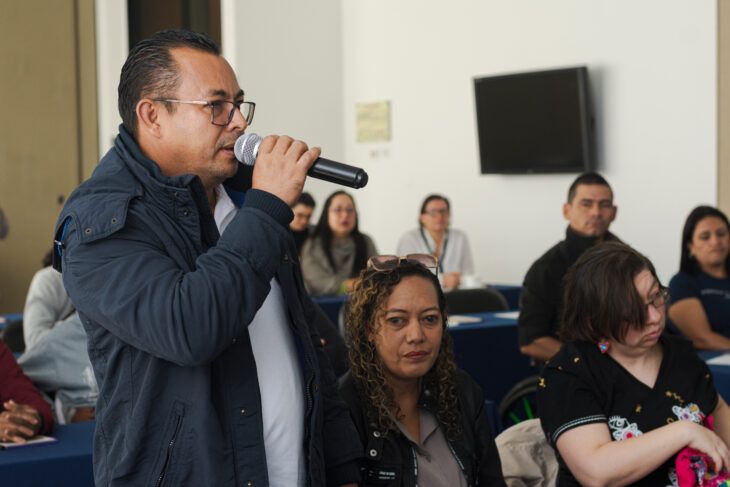
In Colombia, many participants, particularly those from territories impacted by conflict, did not know about these international frameworks before the workshop. In Niger, several participants expressed concerns about the resources schools would need to deliver inclusive education. The group went on to discuss that inclusive education is a journey which starts with making use of existing resources.
After reviewing the international frameworks, participants reflected on the extent to which their countries follow these frameworks, and explored the barriers facing children with disabilities accessing EiE interventions. In both Colombia and Niger, participants identified many barriers impacting children and their families, such as poor physical accessibility, lack of training opportunities for teachers, medical model approach to disability and more.
As day 1 ended, OPD participants reflected on the opportunities that lie ahead on their journey towards education systems that are fully inclusive of all children. Participants in both Colombia and Niger celebrated the potential of OPDs as key leaders in driving change.
Day 2 – Strengthening advocacy
Building on the understanding developed on day 1, participants shifted focus to developing advocacy skills. Reflecting on the barriers identified on day 1, participants worked in groups to develop strong advocacy messages, guided by questions about the specific barriers they had chosen to address and their impact on children with disabilities and their families, the changes that OPDs want to see happen, and supporting arguments.
In the afternoon, participants presented their advocacy messages through a role-play activity, strengthening their approach using feedback from facilitators and peers. Participants identified a variety of target audiences, and worked to adapt their messages and use different advocacy messages for each of these audiences.
Day 3 – OPDs taking the lead
On day 3, participants focused on preparing to lead the collaborative workshop with humanitarian actors the following day.
OPD representatives reviewed the findings of a survey of humanitarian actors working in EiE across Colombia and Niger. This survey asked humanitarian actors about the data they collect and have access to about children with disabilities accessing EiE interventions, as well as the barriers they face in reaching children with disabilities and their families and the things that they would like to learn from new data. The survey also invited humanitarian actors to reflect on the barriers that children with disabilities face, as well as things that make it easier for them to access EiE interventions.
Participants agreed with barriers identified by humanitarian actors who responded to the survey, and contributed additional barriers that have been reported by children and families throughout their networks. Building on these identified barriers, as well as those discussed on day 1 of the workshop, participants developed recommendations for improving access to EiE interventions for children with disabilities to present to humanitarian actors on day 4.
Participants closed the day by preparing to facilitate discussions at the workshop the next day, using role play to practice.
Day 4 – Building partnerships
Following a day of preparation, OPD representatives lead day 4 of the workshop, which brought together OPDs and humanitarian organisations together.
In Colombia, participants learnt about the impact of the ECW’s Multi-Year Resilience Programme in Colombia. A Multi-Year Resilience Programme (MYRP) is a program that provides funding to crisis-affected areas over a period of years. The goal of Education Cannot Wait’s MYRPs is to ensure that children have access to education in emergency situations. You can read more about how Inclusion International member Asdown Colombia is strengthening the MYRP here.
After an overview of the principles of inclusive education, as discussed on day 1 of the workshops, as well as Colombia’s current legal mandates on inclusive education, OPD representatives from territories impacted by ongoing conflict presented the recommendations that they had developed on day 3 to humanitarian actors. These presentations highlighted barriers impacting children with disabilities and their families such as segregation, security risks and more, and gave contextualised recommendations for each region.
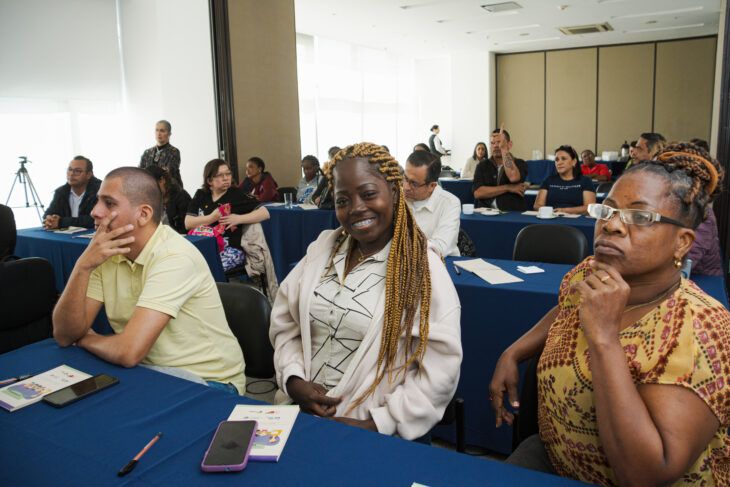
In the afternoon, OPDs, humanitarian agencies and territorial leaders worked together to build action plans about making things better for children with disabilities and their families. Groups agreed to prioritise improving systems for identifying children with disabilities in communities, developing training for family members, teachers and communities, and promoting meaningful engagement of OPDs in territorial forums and disability committees. These action plans included commitments to share information, and to have regular follow up meetings.
In Niger, day 4 brought together representatives of humanitarian organisations, OPDs and government ministries of education and population. Humanitarian organisations presented their active work in Niger, and OPD representatives provided feedback, informed by the lived experience of the people with disabilities and their families in their networks, and understanding of the principles of inclusive education and frameworks supporting them, strengthened during day 1 of the workshops.
Participants then reviewed and adopted the recommendations developed during day 3. These included speeding up the adoption of a national strategy for inclusive education, making sure that humanitarian organisations and government agencies have specific plans (and budget) for meaningful OPD engagement, and more. Participants then developed contextualised regional action plans for regions in Niger impacted by ongoing conflicts.
In both Colombia and Niger, day 4 closed with an introduction to “Unlocking Inclusive Education in Emergency: A Learning Tool for Humanitarian Actors” – an interactive learning tool designed to help humanitarian actors build their knowledge of inclusive education in emergencies, and reflect on how inclusion is implemented in their organisation’s education work. Participants were invited to test the learning tool, as it is currently in its pilot phase, this means that we are testing the tool with a smaller group of people before it is launched. You can read more about the learning tool here.
Looking forward
Though challenges lie ahead, these workshops represent a significant step forwards making sure that all children can access education during crises and emergencies.
After deepening understanding of key principles of inclusive education and relevant international frameworks like the CRPD and strengthening capacity in advocacy, OPD representatives took the lead in the workshop with humanitarian actors and government representatives. This OPDs leadership of collaborative work on EiE actively demonstrates that OPDs are experts, ready to work in partnership to ensure that services reach people with disabilities and their families.
These workshops have facilitated the development of strong partnerships and laid the foundation for more inclusive, rights based EiE interventions that ensure that no child is left behind.