Blog
The CRPD Turns 20: The Promise of Article 19
- Closing institutions
- Inclusive participation & citizenship
- Living in the community
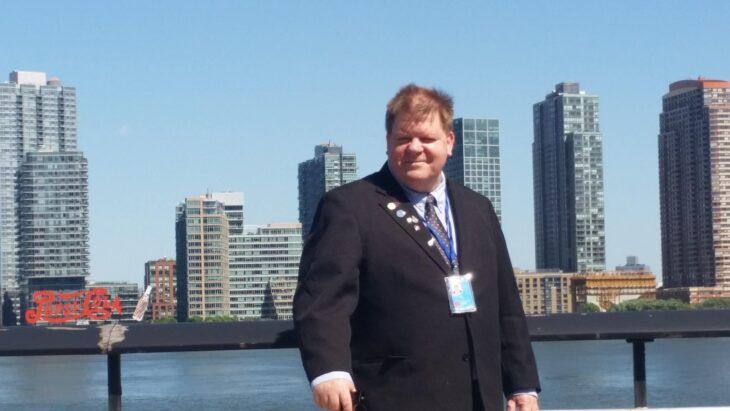
In 2006, governments adopted the Convention on the Rights of Persons with Disabilities. As we mark 20 years of the Convention, we are looking back at the negotiations and the people who shaped it. One of those people was Sir Robert Martin.
Sir Robert has since passed away. He was a storied advocate for Article 19 throughout his life. He was the first person with an intellectual disability to sit on the UN Committee on the Rights of Persons with Disabilities, and the first person with a learning disability to address the United Nations during the negotiations.
Sir Robert was assisted by a small team from People First New Zealand, led by Cindy Johns, and the New Zealand government in his advocacy and in carrying out his role on the Committee.
When he spoke about institutionalisation and segregation, the tone of the room changed. He did not speak in theory. He spoke from lived experience.
Article 19 of the Convention says:
Article 19 – Living independently and being included in the community
States Parties to this Convention recognize the equal right of all persons with disabilities to live in the community, with choices equal to others, and shall take effective and appropriate measures to facilitate full enjoyment by persons with disabilities of this right and their full inclusion and participation in the community, including by ensuring that:
(a) Persons with disabilities have the opportunity to choose their place of residence and where and with whom they live on an equal basis with others and are not obliged to live in a particular living arrangement;
(b) Persons with disabilities have access to a range of in-home, residential and other community support services, including personal assistance necessary to support living and inclusion in the community, and to prevent isolation or segregation from the community;
(c) Community services and facilities for the general population are available on an equal basis to persons with disabilities and are responsive to their needs.
For our movement, this article is not abstract. It sets out clearly what governments must do.
It affirms that people with disabilities have the same right as anyone else to choose where they live and with whom, to access support in the community, and to use the same services as everyone else.
Yet there is still no country where people with intellectual disabilities fully enjoy this right.
Living in an institution taught me that I was a nobody … that my life didn’t really matter.
Sir Robert Martin, Witness Statement, Royal Commission of Inquiry into Abuse in Care
Sir Robert was sent to an institution at 18 months old after a doctor told his mother to send him away and forget about him. He described dormitories with dozens of children, no privacy, shared clothes, the same haircuts, and labels that reduced people to categories. He saw violence and abuse.
He said, “Living in an institution taught me that I was a nobody – that my life didn’t really matter.” He also said, “I realised that I was actually being punished for who I was.”
Article 19 responds directly to that reality. It says no one should be obliged to live in a particular arrangement. No one should be isolated or segregated. No one should grow up believing they do not belong.
Sir Robert was clear that institutions deny many rights at once. The right to education, the right to participate, the right to live free from violence, and even the right to life are all at risk behind closed doors.
Sir Robert warned that we have sometimes replaced large institutions with smaller ones. Different buildings, the same control. “It is the thoughts, feelings and actions of others that make a place an institution,” he said.
Article 19 therefore requires more than closing old facilities. Governments must invest in support in the community. People must have access to personal assistance, inclusive education, housing options, and real choice about where and with whom they live. Power must shift back to people themselves.
Families, citizenship and belonging
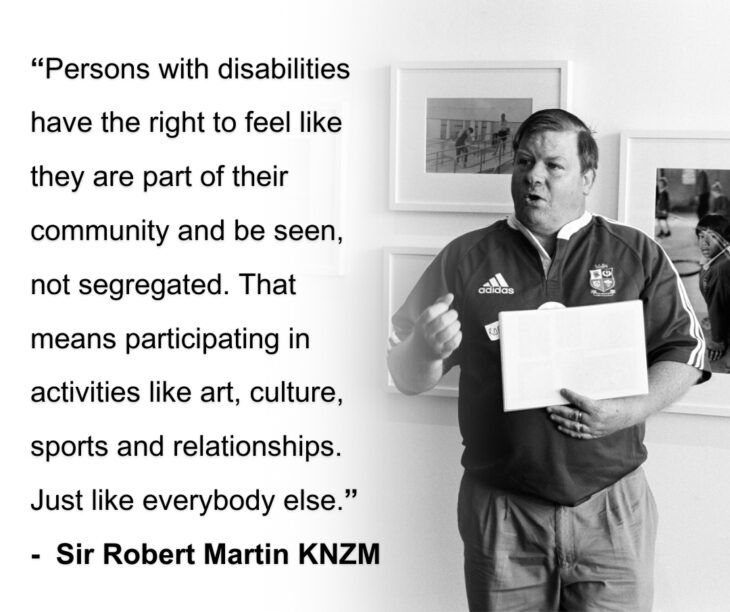
Sir Robert spoke often about families. He believed children should grow up in loving, supported families, not in the care of the State.
Families are the foundation of community life, but they need support, information and services that work. When families are backed properly, children grow up knowing they belong. That sense of belonging sits at the heart of Article 19.
He described independent living in simple terms. It is about choice, friendships and doing the things you want to do in life. It does not mean being alone. It means being recognised as a citizen.
Citizens have the right to vote, to work for fair pay, to take part in culture and community life. “Communities are better places because of what they learn from people with disabilities. Communities need us,” he said.
Sir Robert survived institutionalisation and built a full life. He became a global leader in the disability rights movement, but he never forgot what it meant to be shut away. Throughout his career, he urged governments to make Article 19 real in practice, not just in speeches.
As we reflect on 20 years of the Convention, his words remain a call to action. Article 19 demands choice, support and inclusion. It demands that no child grows up thinking they are a nobody. The promise is clear. Our task is to turn it into reality.