By Federica Settimi, Inclusion International; Diane Richler, International Disability Alliance (IDA); Rediet Mesfin, IDDC and Light for the World; Mariana Rudge, Sightsavers; and Valentina Pomatto, Humanity & Inclusion
Around the world, 272 million children and young people are out of school. Children with disabilities are among the most likely to be left out.
Education is a right. Inclusive education helps every child, not only children with disabilities. Accessible buildings are easier for all students to use. Well-trained teachers can support children who learn in different ways. Flexible teaching helps all children learn better.
Many governments and donors have promised to make education inclusive. But promises are not yet turning into action. Money for aid is shrinking, and the money available for education is far less than what is needed.
What we talked about
On 10 September 2026, we co-hosted a webinar called From Commitment to Action: Financing Inclusive Education for Every Child. Nearly 170 advocates, policymakers and education specialists joined.
Jose Vieira from IDA opened with a warning. Only 0.65% of tracked global education spending goes to disability inclusion.
Policy change will only be effective if first there is investment… but more investment is not enough.
Jose Vieira, International Disability Alliance
Where and how the money is spent matters too, he said.
Keeping promises
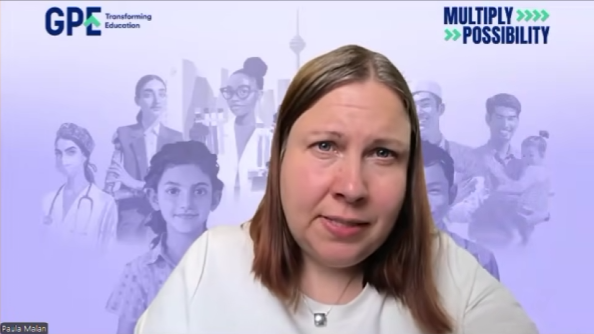
Paula Malan from the Global Partnership for Education (GPE) said partner countries have promised more than US$470 billion of their own money for education. These promises now need to be carried out and checked.
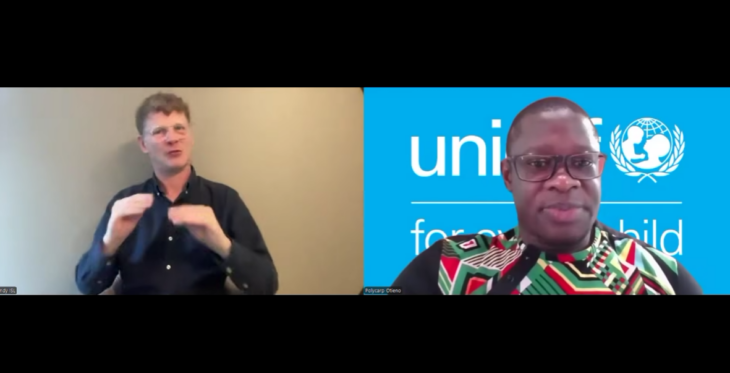
Polycarp Otieno from UNICEF said UNICEF aims to spend 10% of its funding on disability inclusion by 2030. Lasting change means putting inclusion into national budgets and education plans.
Jihane Latrous from Education Cannot Wait (ECW) spoke about education in emergencies. ECW spent 7% of its 2025 funding on targeted support for learners with disabilities.
Disability inclusion is not an afterthought but a mandate.
Jihane Latrous, Education Cannot Wait
Ben Lou Poggo from South Sudan’s Ministry of General Education and Instruction said his country aims to spend 5% of its education budget on inclusion. But he was honest about the challenge: “Without resources it will be very difficult to implement the inclusive education policy.”
Laura Stipanovic from the UNESCO GEM Report said fewer than 1 in 10 countries have a strong focus on fairness in how they fund education.
Speakers agreed that good data is essential. Without it, we cannot know if money is reaching children with disabilities.
What works
Iain Jones from Sightsavers shared cost studies from Zambia, Cameroon and Senegal. This evidence shows governments and donors what inclusive education really costs.
We do it to help debunk the myth that inclusive education is unaffordable.
Iain Jones, Sightsavers
Sophia Mohammed Sayed from Light for the World said long-term, reliable funding helped set up South Sudan’s first university disability resource centre.
Amal Al Barghouthi from Humanity & Inclusion said disability screening tools and community spaces have helped more than 2,000 children with disabilities in Palestine keep learning during conflict.
Mónica Cortés Avilés from Asdown Colombia said organisations of persons with disabilities (OPDs) and families must help lead budget decisions.
The most efficient inclusive education systems include OPDs not as consultants, but as main actors.
Mónica Cortés Avilés, Asdown Colombia
Five things that need to happen
- Do two things at once. Make regular schools accessible to all learners, and also pay for extra support such as assistive devices and specialist teacher training. This is called the “twin-track” approach.
- Put inclusion in the main budget. Inclusion should not depend on short-term projects.
- Track the money. Donors and governments need tools and data that show whether funding reaches learners with disabilities.
- Fund OPDs and families. They bring lived experience and should be equal partners in planning, delivering and checking the work.
- Turn promises into results. Funding must lead to real change for learners with disabilities.
These priorities are not new. They match the Disability Inclusive Education Call to Action, supported by nearly 200 governments and organisations.
We know what works. The choices made in the coming months will decide whether children with disabilities are included or left behind.