Blog
Listen Include Respect Summer School
- Inclusive participation & citizenship
- Africa
- The Americas
- Asia Pacific
- Europe
- Middle East & North Africa (MENA)
In August, Inclusion International held its Listen Include Respect Summer School, a series of sessions where members could talk through parts of the Listen Include Respect Guidelines and build a deeper understanding of what they mean in practice.
What the Summer School Was About
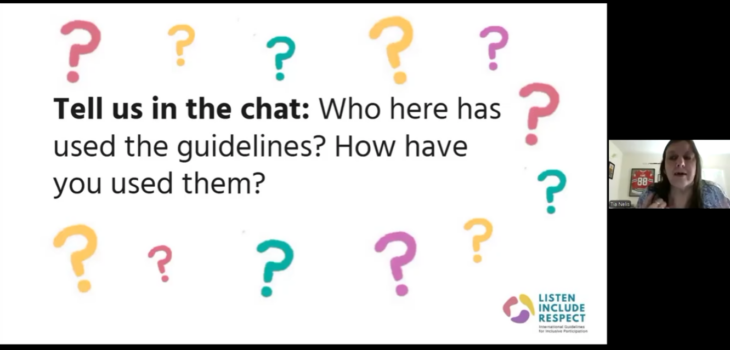
Over four sessions, members talked through different topics that make up the Listen Include Respect guidelines:
- Introduction to Listen Include Respect and the eight principles
- Good support
- Inclusive meetings
- Self-advocacy leadership and inclusive governance
The sessions ran weekly through August and included lots of discussions and some group activities.
Who Took Part
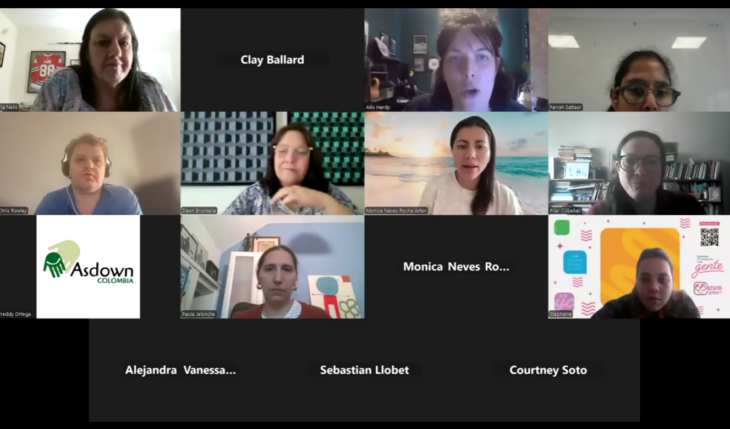
Twenty-two members joined the sessions, representing organisations from Argentina, Bolivia, Brazil, Canada, Colombia, Germany, Lebanon, Panama, Rwanda, Saudi Arabia, South Africa, Türkiye, Uganda and the USA.
Throughout the sessions, members shared their own experiences with using Listen Include Respect and inclusive participation. We talked about the good practices they had found and the challenges.
Key Messages
Some strong messages came out of the discussions. These four stood out to me:
- Inclusion takes time and no organisation is ever finished. You don’t have to be perfect to start.
“No organisation is going to be ready or is going to be the best, even if you want, right away.”
Alejandra Vanessa Pacheco, Asdown Colombia
- Good Support means that the person receiving support must share the support they want and need, not the supporter. Don’t guess what someone needs, ask them, and keep asking.
“Good support is defined by the person that needs the support. They’re the one who says what that support looks like for them and what they need.”
Courtney Soto, Keystone Human Services, USA
- Being in the room is not the same as being included. Members talked about how common tokenism still is, and how hard it can be to challenge.
“The presence of a person with an intellectual disability in a meeting or on a board is not enough. True participation means having a voice, making choices, and playing a role in decision-making, while receiving the support and accommodations needed to enable them to lead and participate effectively.”
Eman Yaseen, Help Center, Saudi Arabia
- Members were also clear about the biggest barrier they face. Lack of time most often causes exclusion.
“Time is a key issue when you talk about support. And we live more and more in a hectic world. We are always running. And I think the call of intellectual disability is always to ask us to stop and think”
Marta Avancini, FBASD, Brazil
Feedback
As one of the facilitators alongside Tia Nelis, I felt the Summer School helped me know better how members and self-advocates use Listen Include Respect and how they understand it.
We were happy to know that members agree with what the guidelines say. We heard many great examples of inclusive participation from our members; it is good to know the guidelines are helpful. Many members have been sharing the guidelines in their countries.
Members were very positive about the Summer School, their feedback showed us they were happy with the discussions and activities.
We need these kinds of sessions with our members to stay connected and up to date, so we hope we can run the Summer School again.
More information
Members asked to keep learning from each other on Listen Include Respect some ways to do that are :
- The Listen Include Respect Champions Group an Inclusion International discussion group that meets every three months. It’s open to anyone in a member organisation. Sign up here
- An open invitation to member organisations to share their own stories and resources on Inclusive Participation and using Listen Include Respect, in any language, We can share with the network. Email Ailis, Mark and Tia.
- We also want to create a new space for supporters to share their experiences and learn from one another, since many people supporting self-advocates are family, friends, or staff rather than trained professionals. We hope to do this soon.
Thank you to everyone who participated in the Summer School.
If you are interested and want to read more, you can take a look at the Summer School Report linked here.